When evolution moves beyond recognition
Context
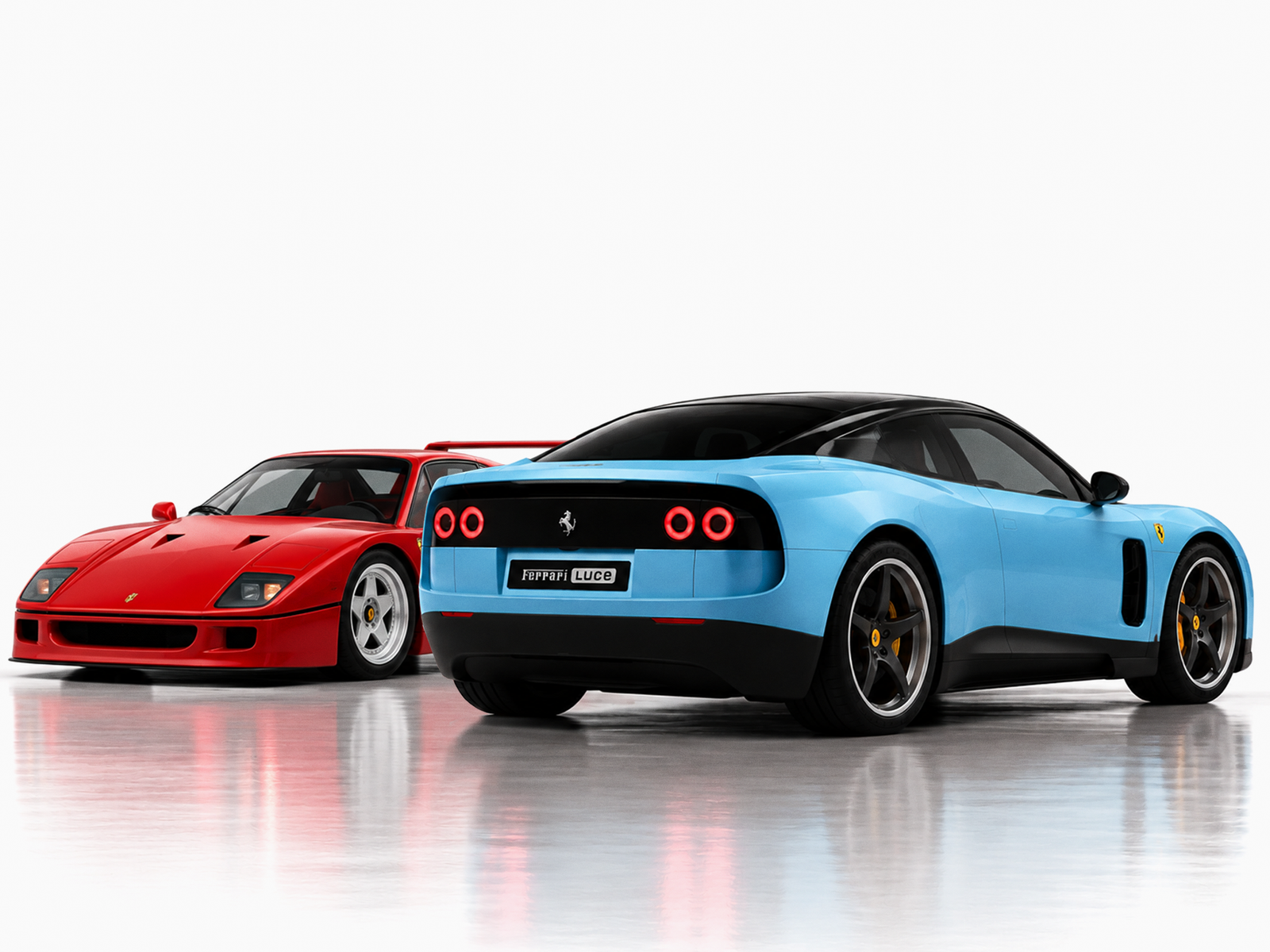
Ferrari Luce is Ferrari’s first fully electric production car, and its launch represents a much larger transition than the arrival of a new model.
Ferrari has spent decades building a very specific relationship between performance, design and desire. Its cars are not simply engineered objects. Their visual aggression, proportions, sound and scarcity have helped create a particular emotional response around the brand.
Luce enters at the point where that established system has to encounter a fundamentally different technology.
Ferrari did not treat the launch as a conventional product reveal. It built the introduction across three stages: the technology was introduced first, followed by the interior and the Luce name in February 2026, before the complete car was revealed at its world premiere in Rome on May 25. Ferrari described it as the beginning of a new chapter.
The launch therefore had a clear problem to solve:
How do you introduce a new technological future without disrupting the meaning that made the brand valuable in the first place?
Strategic Intent
Ferrari’s strategic objective was clear.
Luce was not simply another Ferrari with a different powertrain. It was intended to establish Ferrari’s interpretation of the electric era while beginning to move the brand toward a new generation of customers and a new technological reality.
That makes the launch strategically coherent.
The timing was also difficult to avoid. Ferrari had already been investing in electrification and had built an e-building capable of producing combustion, hybrid and electric cars. The company had also progressively introduced hybrid technology into its range before arriving at a fully electric model.
The strategic transition therefore makes sense.
The problem begins further downstream.
Ferrari wasn’t only asking its audience to accept a new technology. It was asking them to recognize Ferrari through a different set of signals.
That is a much harder transition.
Narrative & Clarity
At the simplest level, the story was immediately understandable:
This is Ferrari’s first fully electric car.
But the deeper proposition was less compressed.
Ferrari wanted Luce to represent performance, technology, emotion, luxury, innovation and a new chapter in the company’s history. The collaboration with LoveFrom, founded by former Apple designer Jony Ive, added another layer to the story.
The result was a launch with a clear announcement but a less clear emotional proposition.
The audience could understand what had changed.
It was less obvious why this particular change should feel desirable as Ferrari.
That distinction matters.
Ferrari’s historical strength is not simply that its cars perform. The brand has traditionally converted performance and visual drama into desire. The launch therefore had to do more than prove that an electric Ferrari could be technically credible.
It had to make the future feel desirable in Ferrari’s own language.
Instead, the Luce introduced a noticeably more restrained visual vocabulary at exactly the moment Ferrari needed recognition to do some of the explanatory work.
The result was a clarity gap between:
“This is the future of Ferrari.”
and:
“I can see why this future still feels like Ferrari.”
Structural Architecture
The strongest part of the launch was its sequencing.
Ferrari did not reveal everything at once. It created a progression from technology to interior and identity, and finally to the complete vehicle.
That gave the launch multiple moments rather than a single announcement. The structure created anticipation while allowing Ferrari to establish the technological argument before revealing the physical object.
The final reveal then received an unusually powerful stage: Rome, with the car presented in a highly controlled institutional and cultural environment. The scale of the moment reinforced that Luce was being positioned as a historical transition rather than simply another model launch.
From an activation standpoint, this was deliberate and sophisticated.
But the architecture also exposed its central weakness.
Each stage increased the audience’s investment in a future they had not yet seen.
When the complete product finally appeared, the accumulated expectation had to resolve into a single perception.
And that perception was divisive.
The launch generated enormous attention, but the reaction was sharply polarized. Ferrari’s share price fell more than 8% following the reveal, while criticism focused heavily on the design and the distance from Ferrari’s traditional visual identity.
The architecture successfully built anticipation.
It did not fully control what that anticipation became.
Where It Leaked
The leak was not electrification.
Ferrari had prepared the market for electrification for years.
The leak was recognition.
The launch changed several of the cues through which Ferrari has historically generated desire at the same time: the powertrain, the sound experience, the proportions, the visual language and the design authorship.
Individually, each change can be defended.
Together, they created a larger perceptual discontinuity.
This is where the launch moved away from the core problem it needed to solve.
Ferrari successfully communicated:
“We are changing.”
But it was less successful at communicating:
“What you desire about Ferrari remains intact.”
That distinction explains why the launch could be commercially compelling and perceptually controversial at the same time. Ferrari later reported strong demand, with its planned 2026 allocation reportedly sold within two months of the May launch.
Demand therefore does not erase the launch’s perceptual problem.
It makes the problem more interesting.
A customer can want the product without necessarily accepting the new meaning being proposed around it.
If Re-Architected
The first adjustment would not be to make the product more traditional.
It would be to establish the emotional continuity before introducing the technological discontinuity.
Ferrari needed to make the audience feel the thing that makes Ferrari desirable before asking them to accept the new form that desire would take.
The second adjustment would be to reduce the number of simultaneous perceptual changes.
The electric powertrain was already a major break.
The launch did not necessarily need to make design language, authorship, interaction and audience positioning feel equally new at the same moment.
A stronger architecture would have created one clear bridge:
The Ferrari you desire is changing its technology, not abandoning the source of that desire.
Then the new technology becomes evidence of evolution rather than evidence of replacement.
Final Assessment
Luce was not a poorly engineered launch.
It was highly deliberate: strategically significant, carefully staged, culturally relevant and capable of generating enormous attention.
Its weakness was more specific.
Ferrari designed a strong mechanism for introducing change, but a weaker mechanism for preserving recognition.
That distinction matters because Ferrari’s greatest asset is not simply its ability to build something new.
It is its ability to make something new feel unmistakably desirable as a Ferrari.
Launch Rating: 7.8 / 10
When a brand changes the signals through which desire is created,
Evolution can become indistinguishable from departure.