
When the Recovery Became the Launch
Context
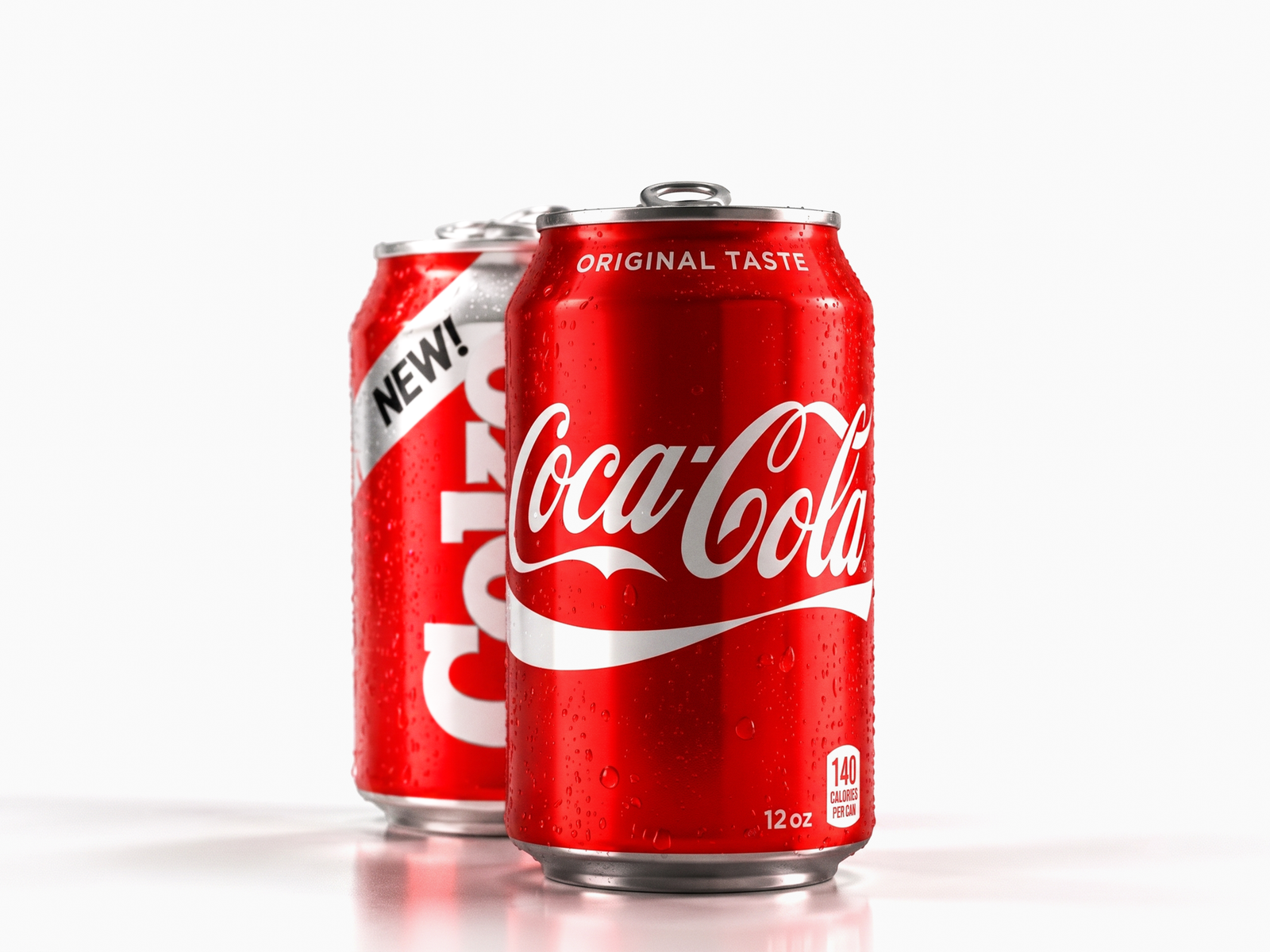
In April 1985, Coca-Cola made the first formula change to its flagship drink in 99 years. The decision was driven by a deteriorating competitive position in the U.S. cola market. Coca-Cola’s share lead over Pepsi had been declining for years, while taste tests involving nearly 200,000 consumers indicated a preference for the reformulated product. The company introduced the new formula as New Coke.
What the research did not capture was the meaning attached to the existing product. Consumers did not experience Coca-Cola solely as a taste. For many, it was connected to memories, routines, and cultural familiarity. The formula change triggered protests, stockpiling, organized consumer groups, and a dramatic increase in calls to Coca-Cola. By June, the company’s consumer hotline was receiving roughly 1,500 calls a day, compared with 400 before the change.
On July 11, just 79 days after New Coke’s introduction, Coca-Cola announced the return of the original formula under a new name: Coca-Cola Classic.
The recovery therefore became its own launch.
Strategic Intent
The immediate objective was simple: restore the original Coca-Cola to consumers who had rejected its removal.
But structurally, something more significant was happening.
Coca-Cola was no longer trying to convince people that the new product was better. It was responding to evidence that the existing relationship between consumers and the brand had been misunderstood.
The strategic transition changed from:
“Convince consumers to accept something new.”
to:
“Give consumers back what they believe belongs to them.”
That distinction made the reintroduction unusually clear.
The company did not need to manufacture a new reason for Coca-Cola to matter. The public reaction had already exposed one. The original product had acquired meaning that could not be reduced to taste preference.
The launch therefore turned the source of the crisis into the reason for the recovery.
Narrative & Clarity
Classic Coke had an unusually compressed narrative.
The original Coke is back.
There was little need for product education, feature explanation, or comparative argument. Consumers already knew the product. The problem was availability, not awareness.
This gave Coca-Cola something New Coke did not have: a proposition that could be understood almost instantly.
The name itself also carried the narrative.
“Classic” transformed the old formula from something that had been replaced into something that had endured. It established continuity rather than simply admitting reversal.
The distinction became even clearer through the advertising architecture that followed. Coca-Cola gave the two products separate campaigns, with “Red, White & You” associated with Coca-Cola Classic and “Catch the Wave” associated with the newer Coke.
The communication was no longer asking consumers to choose between old and new in the abstract.
It was giving the original product a defined identity again.
Structural Architecture
The strength of the Classic Coke launch was its sequence.
Tension → Transition → Promise → Proof → Entry → Reinforcement
The tension already existed.
Consumers had demonstrated that the removal of the original product was unacceptable to them. The company did not have to invent urgency. It was already visible in calls, protests, media coverage, and consumer behavior.
The transition was equally clear.
New Coke → Coca-Cola Classic
The company reversed the product decision while preserving New Coke as a separate offering.
The promise was immediate:
The Coca-Cola you knew is available again.
Proof was built into the product itself. There was no complicated demonstration required. The returned formula was the evidence.
Then came the launch moment.
On July 11, the announcement became a major media event. Coca-Cola reported that the story led two network newscasts and appeared on the front pages of virtually every major newspaper. In the following two days, the company received 31,600 calls to its consumer hotline.
The entry mechanism was therefore unusually strong.
People didn’t have to be persuaded to care. They had already demonstrated that they cared.
The company then reinforced the transition by allowing Classic Coke and the reformulated Coke to coexist, supported by distinct advertising campaigns. The recovery was not simply a one-day announcement. It became a new product architecture within the portfolio.
This is where the launch becomes particularly interesting.
Coca-Cola did not attempt to erase the previous mistake.
It incorporated the mistake into the new structure.
Where It Leaked
The weakness was not in the recovery architecture itself. It was in what had to happen before the recovery could exist.
The original launch had treated preference as the primary variable.
The research had established that consumers preferred the reformulated taste in controlled tests. But that evidence did not capture the broader relationship consumers had with Coca-Cola. Coca-Cola itself later acknowledged that the testing had failed to measure this emotional attachment.
That created a fundamental perception gap.
The company was optimizing the product while consumers were protecting the meaning surrounding it.
Once the formula changed, that gap became visible.
The deeper structural leak was therefore not simply “bad research.”
It was a mismatch between what was being measured and what was actually being protected.
Coca-Cola had treated the formula as a product variable.
Consumers had treated it as part of the brand’s continuity.
The recovery worked because the company finally responded to the second system.
If Re-Architected
The original 1985 launch could have been architected around addition rather than replacement.
Instead of removing the existing Coca-Cola formula, the reformulated product could have entered as a distinct extension, allowing consumers to choose between continuity and experimentation.
That would have preserved the accumulated meaning of the original while still giving Coca-Cola a mechanism to compete on taste.
The second adjustment would have been to treat consumer attachment as an architectural variable before launch, rather than discovering its importance through backlash.
The lesson is not that consumer research was useless.
It is that preference and meaning are different signals.
A product can win the taste test while losing the relationship.
Final Assessment
Classic Coke demonstrates a rare form of launch architecture: recovery through reversal without abandoning the brand’s underlying identity.
The original launch disrupted an established relationship. The recovery succeeded because it stopped trying to create a new relationship and instead restored the one consumers had already built.
The mistake created the tension.
The public reaction revealed the meaning.
The reversal created the transition.
And the return of the original product became the proof.
Launch Rating: 9.6 / 10
Sometimes the strongest recovery is not a correction of the story,
But a recognition of what the story was actually about.