When reliability becomes the product, behavior follows.
Context
In 2009, Uber (then UberCab) launched in San Francisco as a premium black-car service accessible through a mobile app.
The initial product was not positioned as mass transportation. It targeted a narrow segment of urban users willing to pay for reliability, convenience, and reduced friction in securing a ride.
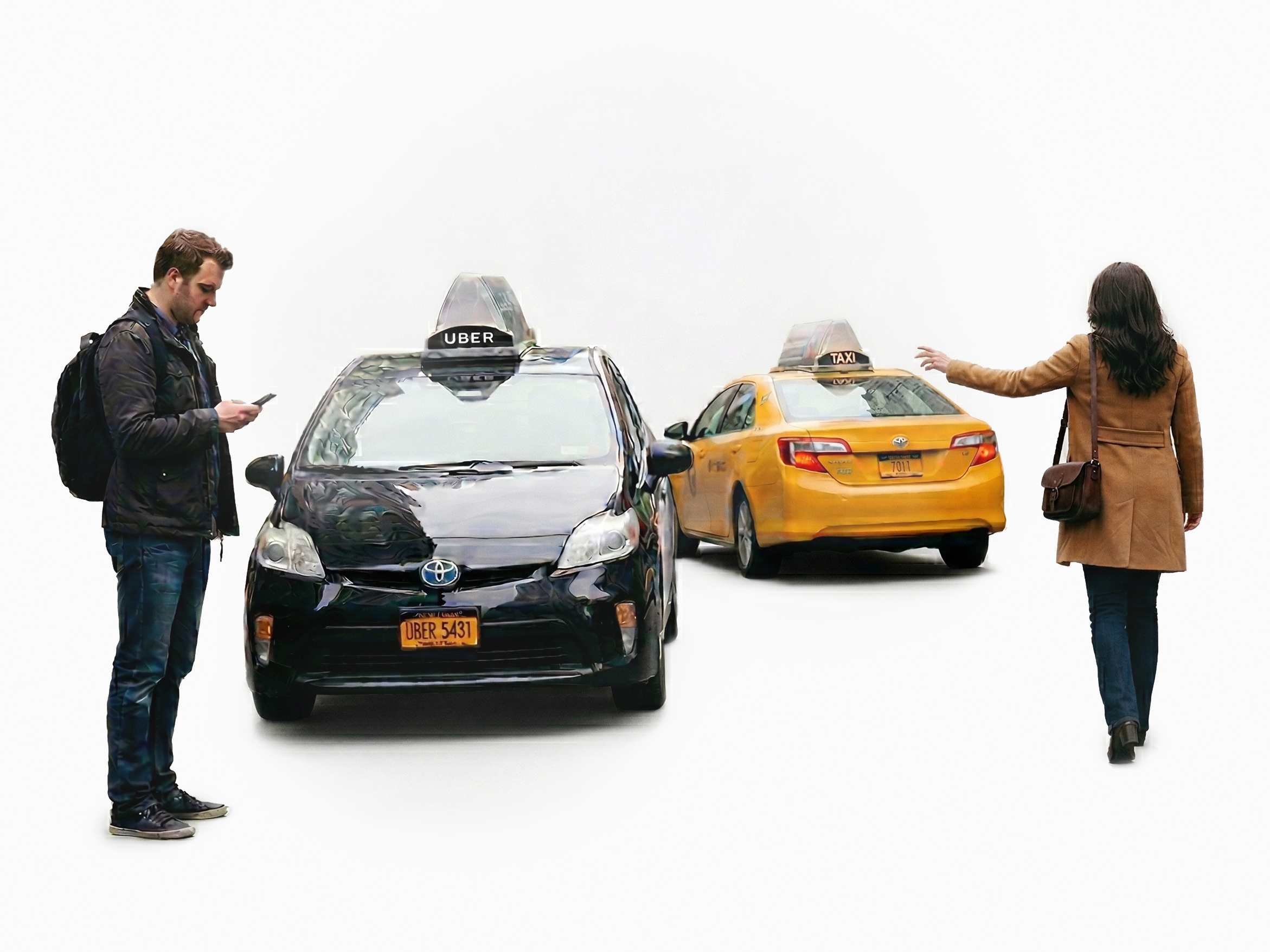
At the time, urban transportation systems, particularly taxis, were widely used but structurally inefficient. Riders faced unpredictability in availability, inconsistent pricing, lack of transparency, and poor service reliability.
Uber did not introduce a new category of movement. It entered an existing one with the intention of restructuring how access to transportation was initiated and experienced.
Strategic Intent
The launch was not about offering rides.
It was about:
Transforming transportation from a probabilistic experience into an on-demand system.
The objective was singular and clear:
- Eliminate uncertainty in getting a ride
- Replace street-based discovery with app-based dispatch
- Introduce predictability into pricing, timing, and experience
Unlike category-creating launches, Uber operated within an already accepted behavioral framework.
The strategic move was not to convince users to adopt a new need, but to re-engineer an existing habit.
Narrative & Clarity
Uber’s value proposition was one of the most compressed in modern product launches:
Tap a button. Get a ride.
The product demonstration itself served as the narrative.
- Open app
- Request ride
- Car arrives
No abstraction was required.
The differentiation from taxis was immediately visible:
- No street hailing
- No cash exchange
- No ambiguity in driver or route
Clarity was not constructed through messaging.
It was inherent in the interaction model.
Structural Architecture
Uber’s launch did not rely on a singular global moment.
Instead, it deployed a city-by-city rollout architecture, beginning with San Francisco.
Key structural components:
1. Supply-first activation
Drivers were onboarded and controlled before demand was scaled, ensuring reliability at launch.
2. Geographic density focus
Initial operations were concentrated in dense urban zones to maintain low wait times and high service consistency.
This density was not an operational choice alone. It was required to achieve liquidity, the point at which supply reliably meets demand. Without this, the system collapses.
3. Product as proof
The app experience itself acted as the primary conversion mechanism, reducing reliance on heavy narrative campaigns.
4. Progressive expansion system
Each city launch functioned as a repeatable module:
- Seed supply
- Activate demand
- Stabilize experience
- Expand coverage
5. Friction removal loop
GPS tracking, upfront pricing, and cashless payments collectively removed key friction points embedded in taxi systems.
Uber did not stage a launch event.
It built a rollout machine.
Where It Leaked
1. Lack of a defined launch moment
There was no singular event that concentrated attention or symbolized category shift.
2. Limited narrative ownership at launch
The launch relied heavily on product utility rather than a distinctive brand narrative or founder-led storytelling.
3. Replicable architecture
The core system, once visible, was reproducible by competitors across geographies.
If Re-Architected
1. Introduce a symbolic launch moment
A defined event or demonstration could have anchored the behavioral shift more visibly in public consciousness.
2. Strengthen narrative layer early
Embedding a stronger founder or brand story during initial rollout could have increased long-term cultural ownability.
Final Assessment
Uber’s launch was not designed to impress.
It was designed to replace.
By prioritizing system reliability over narrative spectacle, it achieved deep behavioral integration with minimal friction.
Launch Rating: 9.1 / 10
Systems that improve with usage reduce the need for persuasion.