
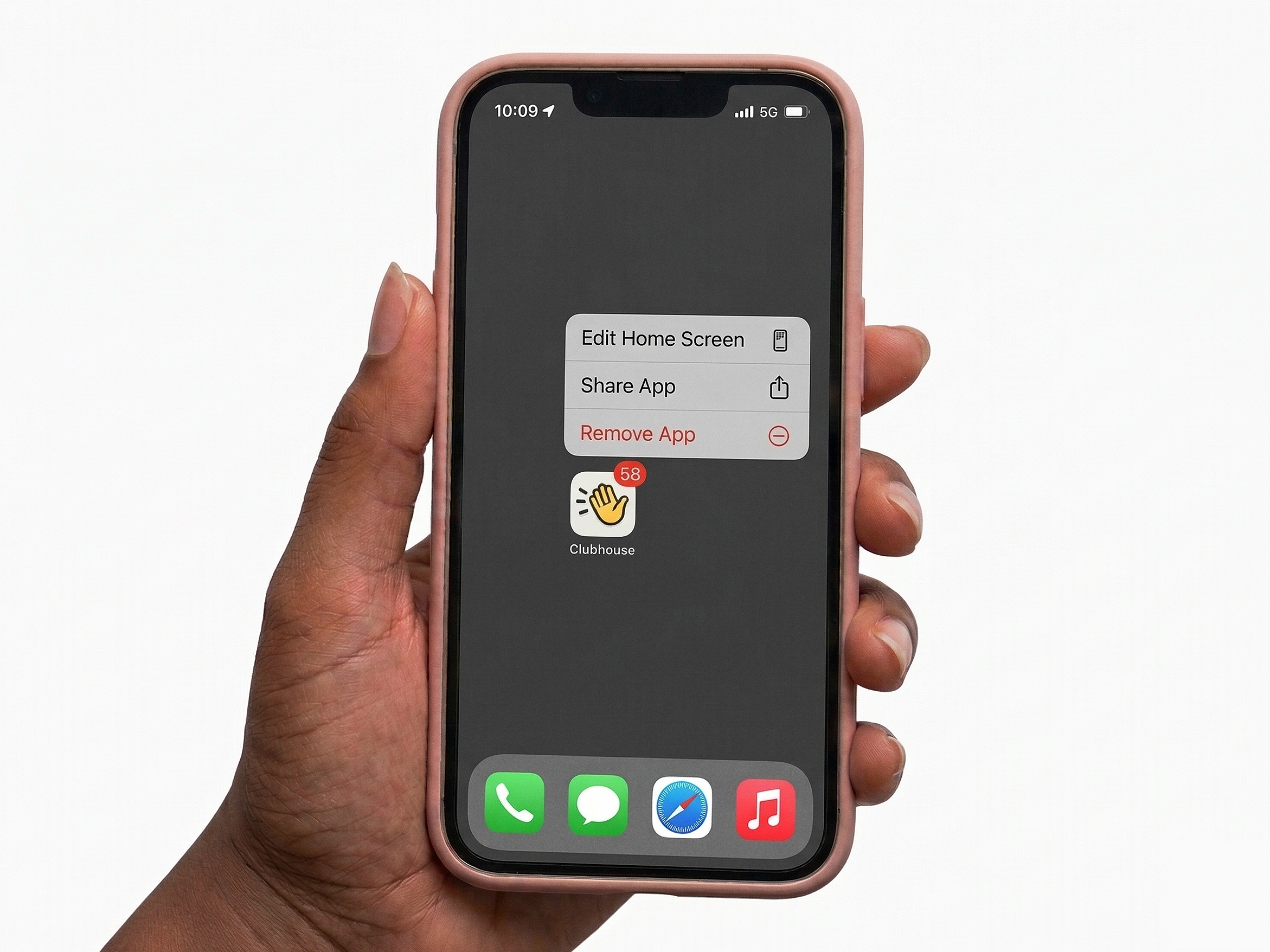
Scarcity can manufacture attention, but not retention.
Context
Clubhouse was launched in 2020 by Paul Davison and Rohan Seth as an audio-only social platform built around live, drop-in conversations. The product removed video, removed permanence, and reduced interaction to voice — positioning itself as a more human, less performative layer of social media.
The launch gained momentum during the early months of the COVID-19 pandemic, when global lockdowns significantly increased demand for real-time digital interaction. Users were confined, isolated, and actively exploring new modes of connection beyond text and video fatigue.
Clubhouse did not follow a traditional launch model. Instead, it introduced an invite-only access system, restricting entry and creating a controlled growth loop. This scarcity-driven rollout became the defining mechanic of its early adoption phase.
At its peak in 2021, Clubhouse became a cultural hotspot — hosting rooms with founders, celebrities, and investors, and positioning itself as the new frontier of social interaction.
Strategic Intent
The launch aimed to redefine how people interact online by shifting focus from asynchronous, curated content to live, unfiltered conversation.
This was not positioned as a feature, it was framed as a new category: social audio.
The underlying ambition was to build a platform where presence mattered more than production, and where participation replaced performance. In doing so, Clubhouse attempted to challenge the dominant paradigms established by platforms like Twitter and Instagram.
The strategic objective was singular and clear: make live voice interaction a primary social behavior. However, the launch did not clearly articulate how this behavior would compound into a durable, long-term system.
Narrative & Clarity
Clubhouse achieved strong narrative compression.
The product could be explained in one sentence: live audio conversations you can join anytime. This simplicity reduced friction in both understanding and adoption.
Differentiation was immediate. At a time when most platforms prioritized visual content or asynchronous posting, Clubhouse introduced a format that was ephemeral, voice-driven, and participatory.
The interface reinforced this clarity. Users entered rooms, listened, and raised their hand to speak. No complex onboarding, no content creation barrier.
However, while the product was clear, the narrative ceiling was limited.
There was no deeper articulation of why audio would persist beyond novelty, or how it would evolve into a sustained behavioral shift. Clarity accelerated entry, but did not build long-term conviction.
Structural Architecture
The core of Clubhouse’s launch architecture was controlled access.
The invite-only system served multiple structural functions simultaneously:
- It manufactured scarcity
- It increased perceived value of access
- It created organic distribution through user-to-user invitations
This effectively turned users into distribution nodes, eliminating the need for traditional acquisition channels.
Timing amplified this structure. The launch coincided with a global moment of isolation, where users were primed for real-time connection. This alignment significantly reduced resistance to adoption.
Influencer and founder participation acted as early-stage credibility anchors. Rooms featuring high-profile individuals created spikes of attention and social proof.
However, beyond access and participation, the architecture lacked depth.
There was no strong progression system for users. No layered engagement loops. No structural mechanisms to convert curiosity into habit.
Where It Leaked
The primary structural weakness was ownability.
The core product mechanic – live audio rooms – was easily replicable. Platforms like Twitter and Spotify quickly introduced similar features, leveraging existing user bases and distribution advantages.
Clubhouse had no defensible moat beyond early adoption.
The second leak was retention architecture.
Once users experienced the novelty of live audio, there was little structural incentive to return consistently. Engagement depended on who was speaking and when, making the experience unpredictable and inconsistent.
The third leak was contextual dependency.
The pandemic created an unusually high-demand environment for real-time interaction. As offline life resumed, the urgency declined, exposing the absence of deeper behavioral anchoring.
Scarcity drove entry, but it did not translate into sustained value.
If Re-Architected
1. Introduce persistent value layers beyond live sessions
Recorded content, structured programming, and replay systems could have extended the lifespan of conversations and increased retention.
2. Build creator-centric ownership and incentives
Tools for identity, monetization, and audience building would have anchored supply and reduced reliance on spontaneous participation.
Final Assessment
Launch Rating: 6.9 / 10
Clubhouse engineered attention with precision, but without structural retention, the system converted curiosity into participation, not permanence.