
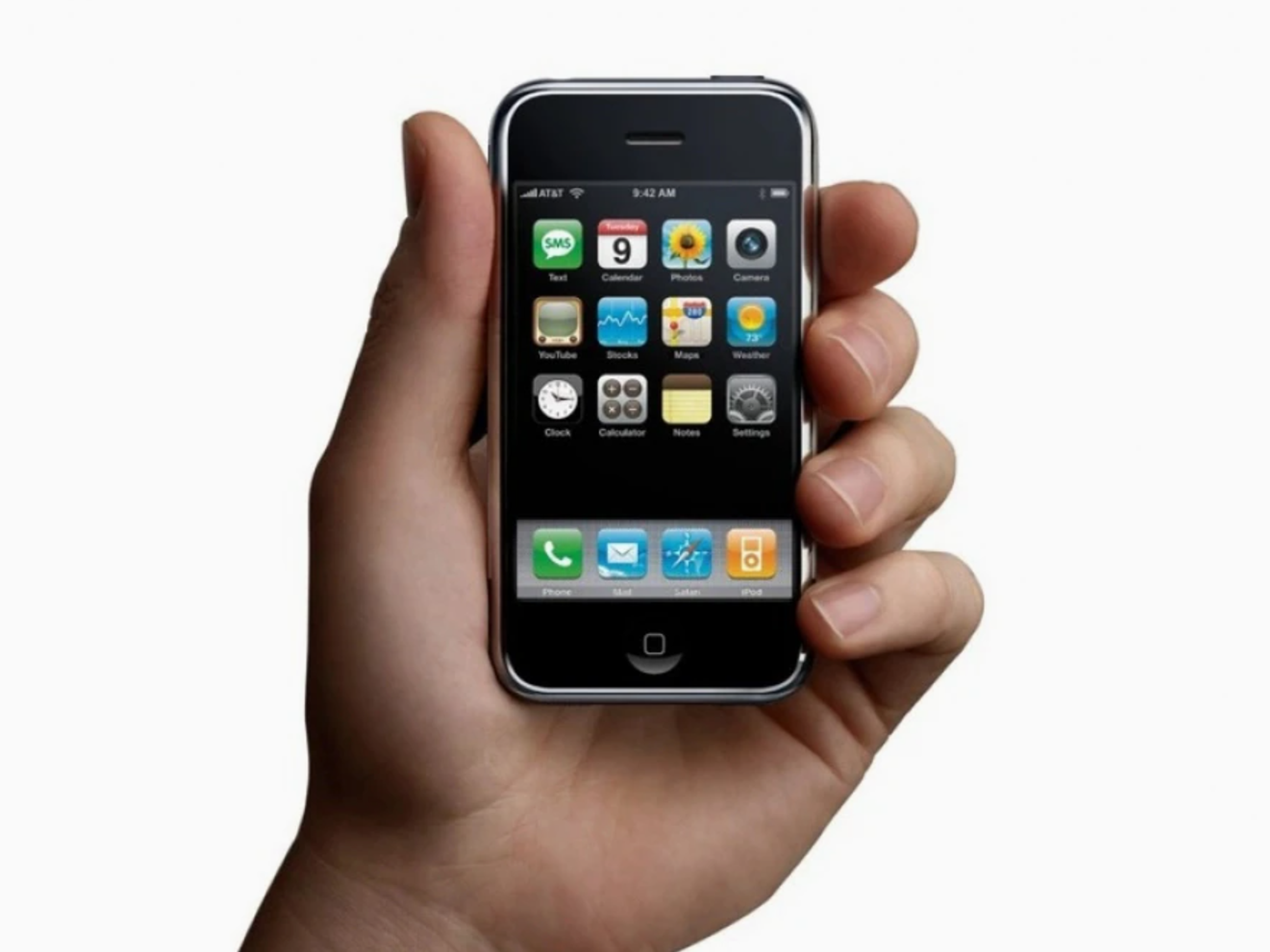
Not by adding features, but by reorganizing meaning.
Context
In January 2007, Apple introduced the first iPhone at the Macworld 2007, presented by Steve Jobs.
At the time, the smartphone category was already populated. Devices from Nokia, BlackBerry, and Microsoft dominated the market. These products were built around physical keyboards, styluses, and fragmented software experiences.
Apple entered this category without prior presence in mobile hardware. Publicly, the launch positioned the iPhone as three products: an iPod, a phone, and an internet communicator.
The device would ship months later, in June 2007, through an exclusive carrier partnership with AT&T.
Strategic Intent
The launch was not attempting incremental improvement within the smartphone category.
It aimed to collapse multiple existing product categories into a single, unified interface.
Instead of competing as a better phone, Apple reframed the device as a new computing layer — one that replaced:
- Music players (iPod)
- Mobile phones
- Portable internet devices
The objective was singular:
Redefine what a personal device is, not what a phone can do.
Narrative & Clarity
The narrative compression was unusually precise.
“An iPod, a phone, and an internet communicator.”
This was not a feature list. It was a structural reframing of the category.
Each component was already familiar to the audience. The innovation was not introduced as complexity, but as unification.
The keynote reinforced this through repetition before revealing that these were not separate devices, but one.
This sequencing allowed the audience to process the shift gradually, avoiding cognitive overload.
Clarity was further strengthened through demonstration:
- Multi-touch gestures
- Visual voicemail
- Full web browsing
These were not described abstractly — they were shown in real-time, making the interface self-explanatory.
The product did not need interpretation.
It resolved confusion through interaction.
Structural Architecture
1. Single-stage reveal anchored to a keynote
The entire launch was concentrated into one controlled moment at Macworld. No fragmented rollout.
2. Founder-led narrative delivery
Steve Jobs acted as the central narrative interface. The product explanation and belief system were unified through one voice.
3. Demonstration-first communication
Instead of specs, the launch relied on live usage. Interaction replaced explanation.
4. Delayed availability with sustained anticipation
The product was announced in January but released in June. This created a prolonged anticipation window rather than immediate conversion.
5. Carrier-based distribution constraint
Exclusive partnership with AT&T structured access, limiting initial reach while simplifying rollout.
The architecture prioritized understanding before availability.
Where It Leaked
1. Conversion gap between announcement and purchase
The multi-month delay introduced a break between peak attention and action. Momentum was not directly converted.
2. Incomplete ecosystem at launch
No App Store at initial release. The device’s long-term value layer was not fully visible at launch.
3. Infrastructure misalignment
Network limitations (EDGE instead of widespread 3G) constrained the “internet communicator” promise in real-world usage.
The structure was strong at narrative level, but partially incomplete at system level.
If Re-Architected
1. Compress announcement-to-availability window
Reduce the temporal gap to align peak attention with purchase capability.
2. Introduce ecosystem layer earlier (developer narrative)
Even if not fully built, signaling extensibility would strengthen long-term framing at launch.
Final Assessment
This launch did not win by feature superiority; it won by redefining the frame in which features were evaluated.
Launch Rating: 9.1 / 10
Categories do not collapse when technology advances, but when meaning is reorganized.