Simple file syncing became viral SaaS infrastructure.
Context
Dropbox launched in 2008 as a cloud-based file synchronization platform founded by Drew Houston and Arash Ferdowsi. At a time when digital life was increasingly spread across multiple devices, users were still relying on USB drives, email attachments, and fragmented local storage systems.
The company entered a market where storage solutions existed, but seamless synchronization did not. Rather than selling storage capacity alone, Dropbox introduced automatic file syncing through an intuitive folder system that required almost no behavioral complexity.
Its launch did not depend on large-scale paid acquisition or theatrical unveiling. Instead, Dropbox used product clarity, targeted early-adopter channels, and viral referral systems to build momentum.
Strategic Intent
Dropbox’s launch was designed to solve one highly specific behavioral problem: eliminate friction in file access across devices.
This strategic precision was critical. Rather than overextending into broader software categories, Dropbox focused narrowly on becoming the default sync layer for personal productivity.
The objective was not simply customer acquisition. It was behavioral integration.
By solving a universal digital inconvenience with singular clarity, Dropbox positioned itself as infrastructure rather than optional software.
Narrative & Clarity
Dropbox’s value proposition was exceptionally compressed.
The product could be understood almost instantly: your files automatically available anywhere.
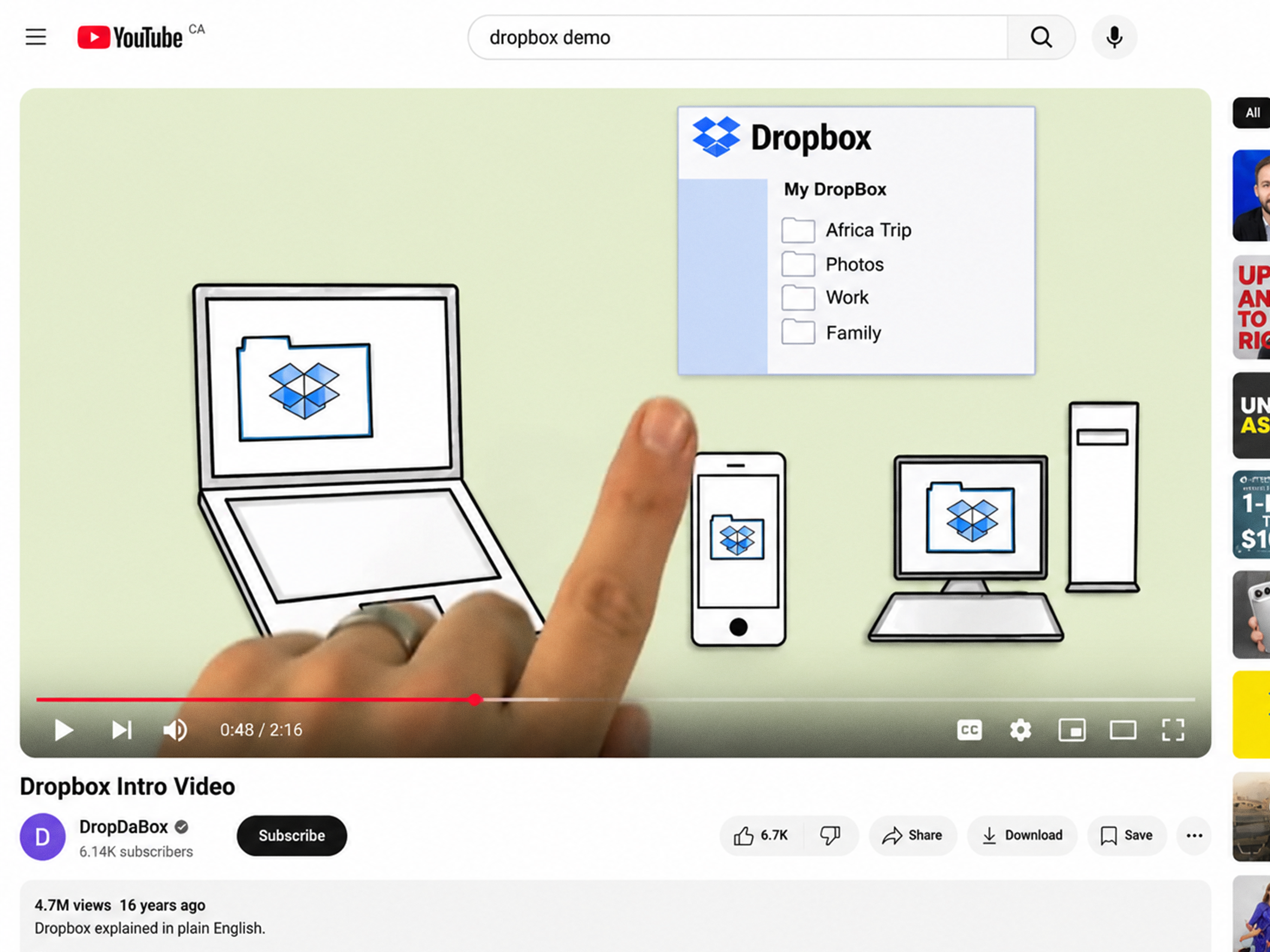
Its now-famous explainer demo became central to launch success because it translated technical functionality into immediate practical utility.
This was one of SaaS’s clearest examples of narrative discipline. Dropbox did not overwhelm users with features. It sold friction removal.
In product-led growth, clarity often outperforms persuasion.
Structural Architecture
Dropbox’s launch architecture was structurally sophisticated despite appearing simple externally.
Core launch mechanics:
1. Private beta scarcity
Controlled access created exclusivity and curiosity.
2. Viral explainer video
The demo resonated deeply with early adopters, particularly within startup and tech communities.
3. Referral-based waitlist acceleration
Users were incentivized to invite others for increased storage.
4. Product as distribution engine
Growth was engineered directly into user behavior.
This transformed the launch from a conventional software release into a scalable PLG system.
Dropbox did not merely market a product. It architected adoption loops.
Where It Leaked
- Core product mechanics were eventually replicable by major competitors
- Early launch focused more heavily on consumer acquisition than enterprise lock-in
- Long-term differentiation required ecosystem expansion beyond syncing simplicity
Dropbox’s greatest structural vulnerability was not launch execution, but future defensibility.
Utility can spread rapidly, but utility alone rarely remains proprietary.
If Re-Architected
1. Accelerate enterprise expansion earlier
Introducing business collaboration sooner could have strengthened monetization architecture.
2. Build deeper ecosystem integrations faster
Earlier platform entrenchment may have improved long-term competitive insulation.
Final Assessment
Dropbox demonstrated that SaaS dominance can emerge not through noise, but through precise product clarity paired with engineered distribution.
Launch Rating: 9.4 / 10
Simplicity, when structurally weaponized, becomes scale.