When platform vision outruns cultural timing.
Context
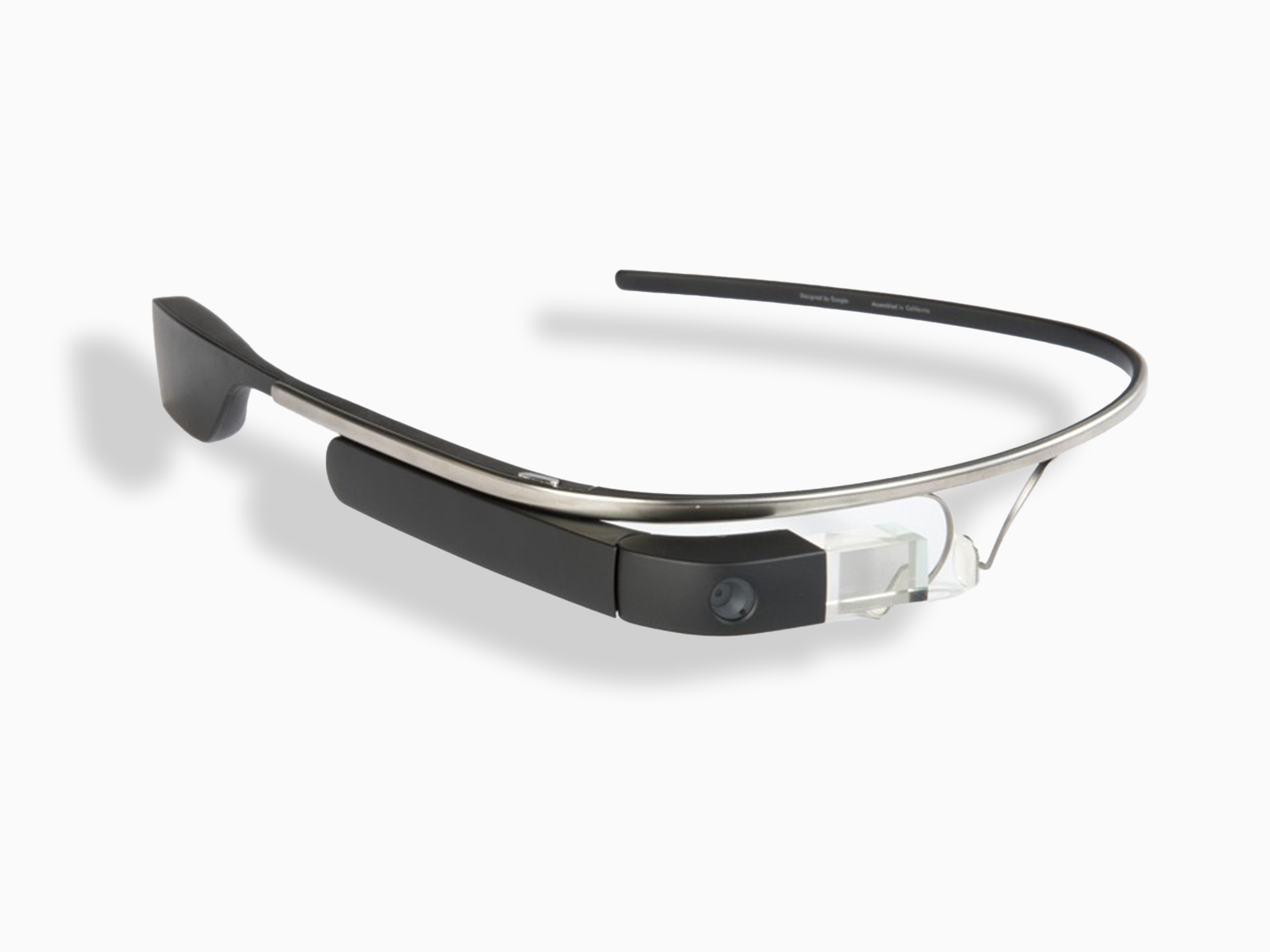
In 2013, Google introduced Google Glass through its Explorer Program, following a high-visibility reveal at Google I/O 2012. The device integrated a prism display, voice commands, camera, and connectivity into lightweight eyewear.
The stated ambition was expansive: shift computing from handheld screens to ambient, hands-free access. Instead of reaching for a phone, information would sit directly in the user’s field of vision.
This was not positioned as an accessory. It was introduced as the beginning of a new computing era.
Strategic Intent
The structural ambition was to normalize wearable augmented computing.
Glass was framed as the next interface layer — information without friction, capture without interruption, navigation without screens.
However, the primary objective lacked compression. The rollout oscillated between developer seeding, early adopter experimentation, and mainstream lifestyle signaling.
Ambition was expansive. Focus was not singular.
Narrative & Clarity
Visually, Glass communicated futurism immediately.
But the value proposition could not be reduced to a single indispensable sentence.
Was it:
– A camera?
– A notification layer?
– A navigation assistant?
– A communication interface?
Observers understood what it did. They did not understand why they needed it.
Within seconds, viewers recognized “glasses with a camera.”
They did not recognize necessity.
Execution polish cannot compensate for structural ambiguity.
Structural Architecture
The reveal moment was engineered effectively. The Google I/O skydiving demonstration created spectacle and technical credibility.
The Explorer Program introduced controlled scarcity at a $1,500 entry point. Application-based access manufactured intrigue and media amplification.
However, structural coherence weakened after the reveal phase.
The pathway from curiosity to habitual adoption was under-architected. Developer interest existed, but mainstream narrative reinforcement did not follow.
Attention was generated. Momentum was not systematized.
Where It Leaked
The primary structural leak was contextual readiness.
There was no urgent consumer tension demanding facial computing. The smartphone had not yet created sufficient friction to justify visible wearable hardware.
Instead of resolving an existing discomfort, Glass introduced a new one — privacy anxiety. Public discomfort with wearable cameras became the dominant narrative.
Target definition also leaked. Pricing and exclusivity implied early adopters, while marketing imagery suggested lifestyle normalization.
The product attempted to represent the future before proving a single indispensable present use case.
Innovation without contextual readiness rarely survives.
Today, more than a decade later, devices like Ray-Ban Meta Smart Glasses are seeing measurable consumer adoption.
What changed was not merely hardware maturity, but contextual alignment. Creator culture normalized wearable capture. Privacy signaling became clearer. Social friction softened.
The idea was not impossible.
The timing was misaligned.
If Re-Architected
Two structural adjustments would have materially changed trajectory:
- Narrow the initial domain to professional or enterprise environments where hands-free computing solves visible friction.
- Delay mainstream lifestyle framing until proof of necessity and behavioral normalization were established.
Compress ambition first. Expand later.
Final Assessment
The Google Glass launch did not collapse under technical weakness.
It collapsed under contextual misalignment.
By attempting to normalize facial computing before proving daily necessity,
the launch increased social risk instead of reducing it.
Launch Rating: 5.6 / 10
A structurally bold signal introduced ahead of cultural and contextual readiness.